Fishing charter availability in Alicante
Fishing charter availability search




Find the best prices for Fishing trips in Alicante. We select the most competitive Boat rates for an unforgettable experience on the high seas. Booking now and enjoy Sport Fishing!

Be your own skipper and fish with your licence
El Campello, Alicante
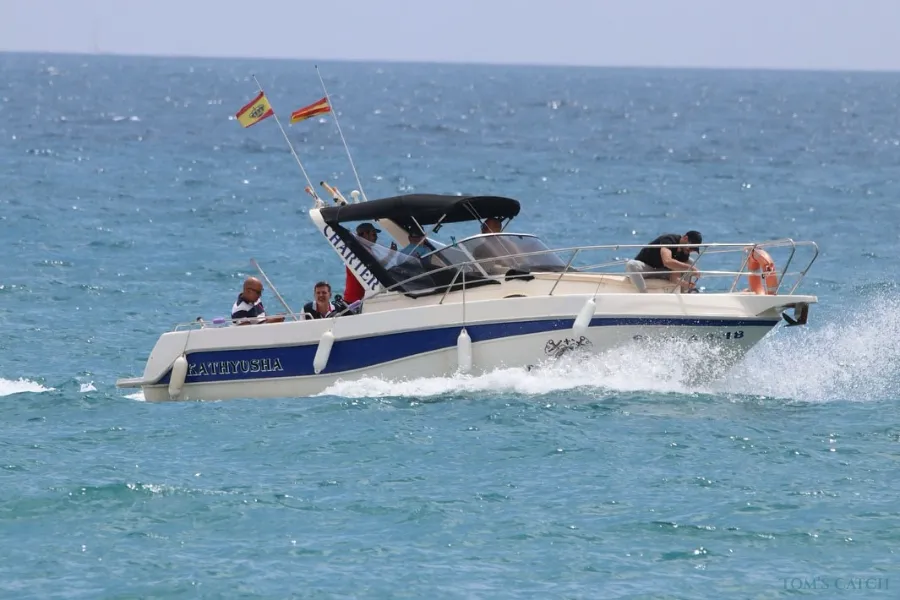
Find the best Fishing Boats in Alicante, selected according to user ratings. Discover high quality boats to enjoy a unique experience at sea. Booking your Fishing charter today.
Half day, inshore Fishing
Jávea
Full day tuna fishing trip.
Jávea
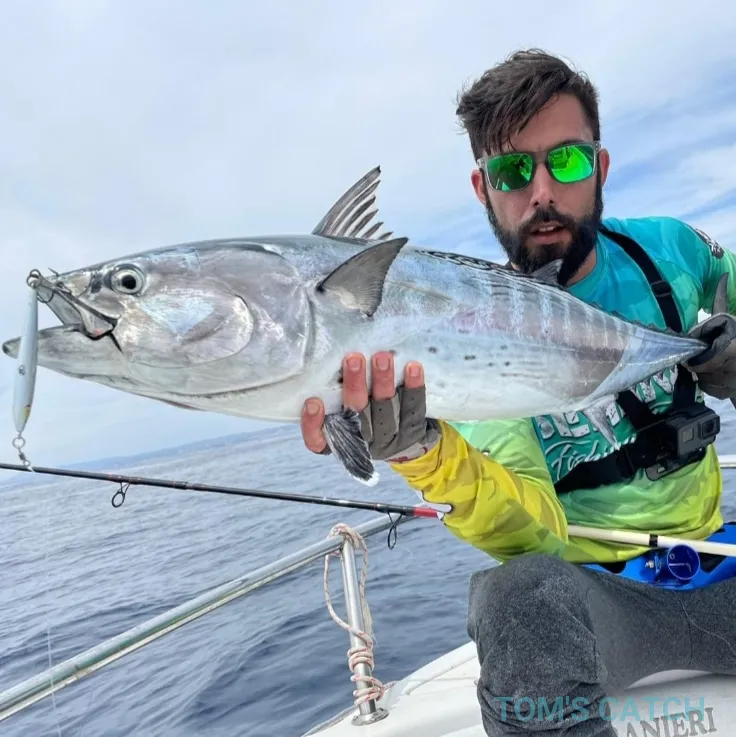
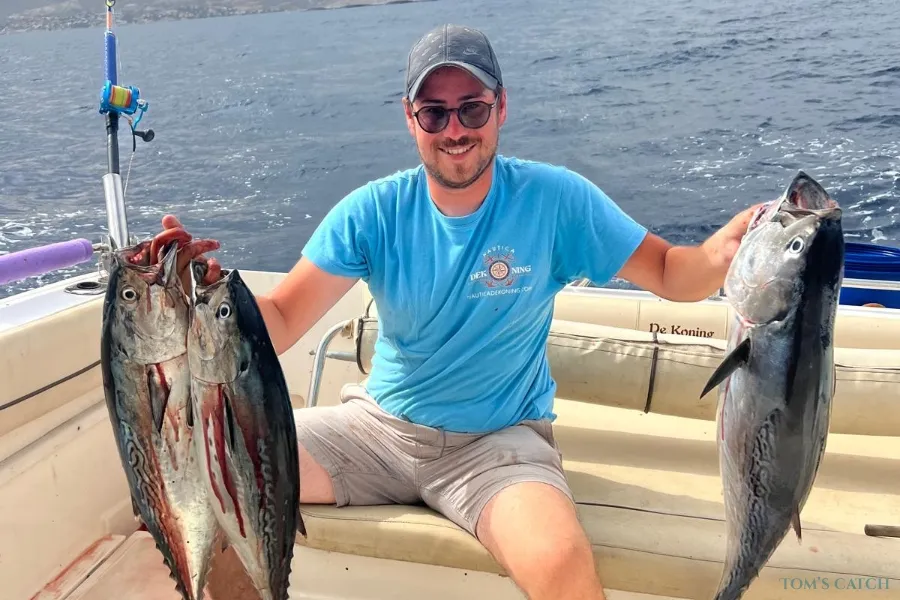
Albacore: The Albacore, also known as Longfin Tuna, has a streamlined body designed for speed. It can be easily distinguished from other species in the tuna family by its long pectoral fins. Its aerodynamic, torpedo-shaped body helps it reach speeds of up to 50 km/h.
Like the rest of its family, the Albacore is a great fighter that will test your strength. It is a fast moving fish, so the best way to fish this species is the trolling technique. Feather rigs and octopus rigs work well for Albacore fishing. For Albacore fishing in Alicante, the best time of the year is summer, from June to August, when they migrate to the Balearic Islands.
Bluefish: The bluefish is an aggressive fish that is often found in schools of baitfish. Trolling is the most commonly used technique for Fishing in Alicante for bluefish, using artificial lures and mostly natural bait such as spect or needle. Other Anglers prefer fishing in Alicante by spinning with the boat, looking for shallow areas where this species is known to be present. With lures such as poppers and stick baits they try to provoke a bite from these predators. Very often there are one or more bluefish chasing the lure, so you have to cast the lure several times to provoke the attack of one of them. This technique is also very showy and exciting as during the fight it usually makes leaps during the fight.
Palometon: The Palometon is a predator that can be found in all Mediterranean waters. It is distinguished by its tanned appearance with a silvery hue on the body and a brownish or grayish coloration on the back. In Cabo de San Antonio rocky bottoms abound, where the Palometones are usually found. Fishing in Alicante from April to October is the time when they abound, these months being the best season for fishing. On the beaches of Valencia and Castellón, especially in the Albuferas, it can also be found hunting in little water.
Lampuga: It is a very agile and graceful fish. Visually they attract attention with a very diverse color palette in their bodies. From green to blue, from yellow to gold. They can be easily distinguished from others by the peculiar shape of their bodies.
The most attractive feature for Alicante fishing enthusiasts of this species is their willingness to fight with all their might. They do not give up until they have exhausted every last drop of energy they have left.
Trolling is the most effective method used by sport fishing enthusiasts in Alicante to catch Lampugas. When sighting surface lampreys it is also a lot of fun to catch them spinning. The best time for Fishing in Valencia for this species is in September-October.
Spring: Fishing in Alicante in spring can be started from April, May, trolling and spinning for Bluefin Tuna and Albacore and Bacoreta. It is also a good time for fishing with espets or needles to catch leerfish or bluefish in 7m - 15m depth. In April it is time to catch the "campanu de túnidos". The first red of the season. It is the time to look for good bites, to engage in fights with animals that are over 50 kilos.
Summer: Fishing in Alicante during the summer is a good time to fish for Bluefin Tuna in the open sea. Closer to the coast you can do bottom trolling with natural bait (Squid, Mackerel or Horse Mackerel) to catch a Dentex or Amberjack. May, June and July are the best months for fishing Albacore and Tuna from 15 to 40 kg.
Autumn: Fishing in Alicante in autumn is an excellent time to practice coastal trolling with small lures and feathers. With this technique we can find at this time of the year various fish such as: Bonito, Mackerel, frigate mackerel, frigate tuna or dolphinfish. It is also a good time for fishing with spinners or needles to catch leerfish or bluefish in 7m - 15m depth.
Winter: Fishing in Alicante during the winter you can do deep sea fishing and bottom fishing. In deep sea we can find big bream, forkbeard, conger eel, Cherna or grouper.
Fishing in Alicante in the high seas is the Ibiza channel, obligatory passage of the Tuna that go to spawn in the Balearic Islands, being this channel an ideal place for Tuna fishing.
Fishing in Alicante has a lot to offer, and not only because of its long coastline. In the capital city of Valencia, the third largest metropolis in the country, history, contemporaneity and culture come together. The old town and monuments reflect the history of the city with emblematic monuments such as the Miguelete, the towers of Serranos and Quart, the Cathedral and the Lonja de Seda (declared a World Heritage Site by Unesco). These monuments coexist with the City of Arts and Sciences, dedicated to scientific and cultural dissemination.
Along the Fishing area in Alicante has charming villages and small towns scattered along its coastline. The two most important for lovers of sport fishing are clearly Denia and Jávea. These two towns are located north and south of Cabo de San Antonio, a strategic location for deep sea fishing, bottom fishing and bottom trolling.
The Spanish province of Alicante lies on the eastern coast of Spain. It stretches along the Costa Blanca (200 km of Mediterranean coastline). Fishing in Alicante is a very popular area along the Costa Blanca and tourists from all over the world travel to Alicante for its wonderful weather and beaches and for being a perfect place for fishing. Valencia, together with Alicante, has a geographical situation, just in front of the Ibiza Channel, a must for the big predators, such as Bluefin Tuna and Albacore, which gives it a key position for the practice of Fishing.
GEOGRAPHICAL INFORMATION
From north to south of the Gulf of Valencia we can find the capes of Peñíscola, Oropesa, and Cullera. The seabed between the Ebro Delta and Cape San Antonio is mostly sand, which favors the presence of marshy areas (such as the lagoons of Oropesa, Gandia and Oliva). As we approach Denia, we leave behind the plains of Valencia and the orography becomes increasingly mountainous. This geographical contrast can also be observed under the sea: Around Cabo de San Antonio, the bottoms are no longer sandy, but mountainous foothills with mud and loose stones; very attractive bottoms for bottom trolling.
Off the coast of Castellón, in the north, are the Columbretes Islands. Here, the prohibition of Fishing has helped to make this Booking a jewel in terms of fauna and flora. We applaud the existence of these Booking, because they are a refuge where Fishing can spawn and reproduce in peace, and in turn, these nourish the surrounding areas with fish.
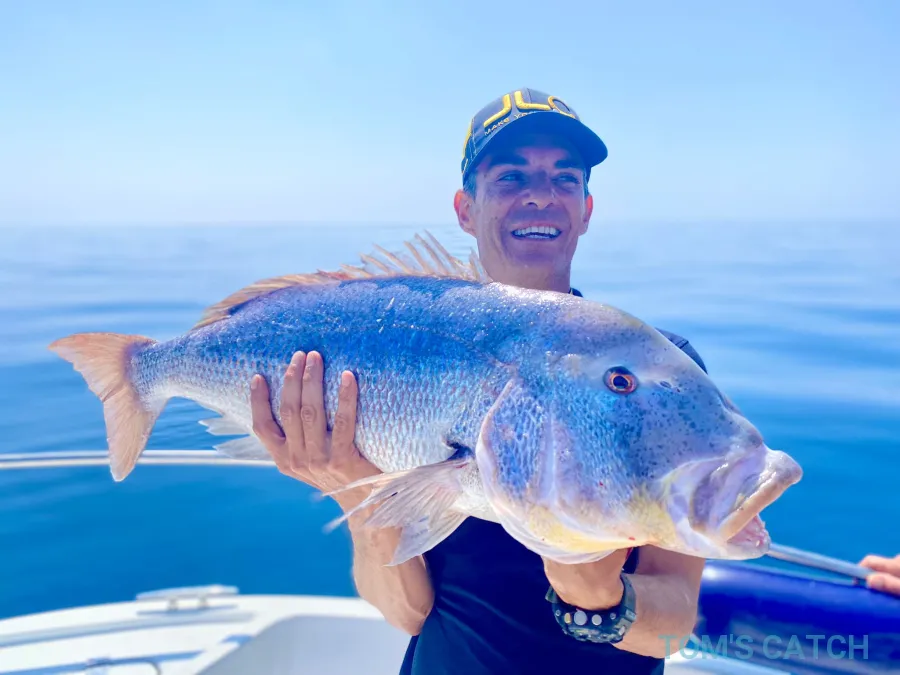
In Cabo de San Antonio the seabed is rocky and gives refuge to predators such as Dentex, Amberjack, Amberjack, leerfish or bluefish. The months of January, February, March and April are especially productive for big dentex trolling. The medium-sized specimens are caught until August. Then, the small blue fish (Bonito, Lampuga, etc.) make their entrance and usually brighten up the afternoons of September and October.
The Ibiza Channel is the obligatory passage of large predators - such as bluefin tuna and albacore - that go to spawn around the Balearic Islands and in the Gulf of Lion. The respective ports of Denia and Jávea are strategically well located for deep-sea fishing, since only 20 miles from the coast there are already depths of 1000 meters. Starting from Alicante you have to sail almost 40 miles to find the 1000 meters depth. The best months for Fishing in Alicante are June, July and August.
WEATHER
Fishing in Valencia has an ideal climate with gentle sea breezes rich in iodine, an excellent ally for therapeutic purposes. For this reason there were settlements of fishing populations in this area of Fishing in Alicante dating back many years. During the 1st and 2nd centuries B.C., the Romans were already preparing their "garum", a rich fish sauce made from salted fish that they transported in amphorae to the Italian peninsula.
Valencia and Alicante enjoy the warmest and most benign version of the Mediterranean climate. The average annual temperature exceeds 17ºC, so summers are warm and winters are very mild. Fishing in Alicante in summer can reach high temperatures, up to 37ºC, and in winter they hardly go below 0ºC. But on average, in winter it is around 10ºC and in summer around 30ºC.
Rainfall tends to be discreet, very infrequent in summer and with its maximum in autumn, late winter and early spring. A quite privileged environment for Fishing in Alicante.
Fishing in Alicante requires a fishing license. Remember that Fishing charters usually already have a collective fishing license so you don't need to buy one if you are hiring a Boat.
| Average capacity: 5 people |
| Popular fishing techniques: Jigging, Bottom fishing, Tuna Fishing |
| Average price: 170.3474912876 per day |
| Low season price:: US$327 per day |
| High season price: US$2326 per day |
| Includes: Fishing equipment, Fishing License, Bait & lures |
Receive exclusive offers, inspiring stories, and updates on fishing regulations.
Subscribe and receive tips and news for your next fishing trip.
“Crecí un 20% mis reservas con Tom’s Catch”
Oscar Santos,
Captain from Luna in Puerto Banús, Marbella (Spain).
Oscar Santos,
Captain from Luna in Puerto Banús, Marbella (Spain).