


Fishing charter availability in Ebro Delta
Fishing charter availability search

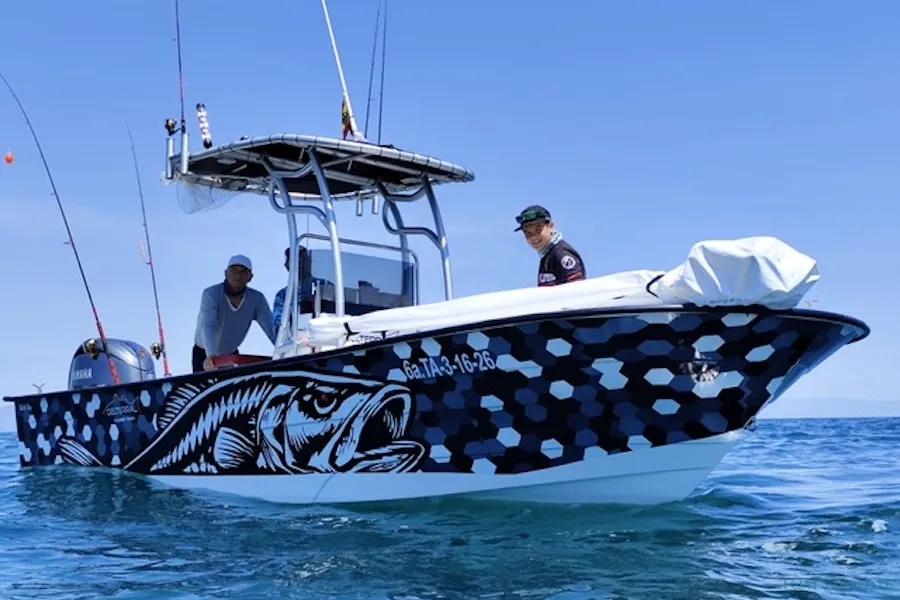
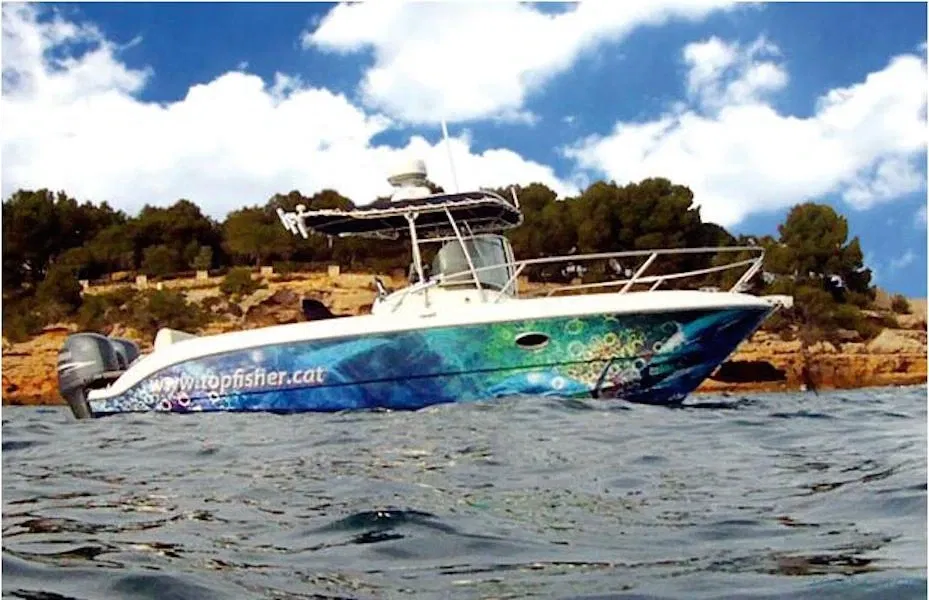
Key Largo 25
Ametlla De Mar, L'Ametlla de Mar
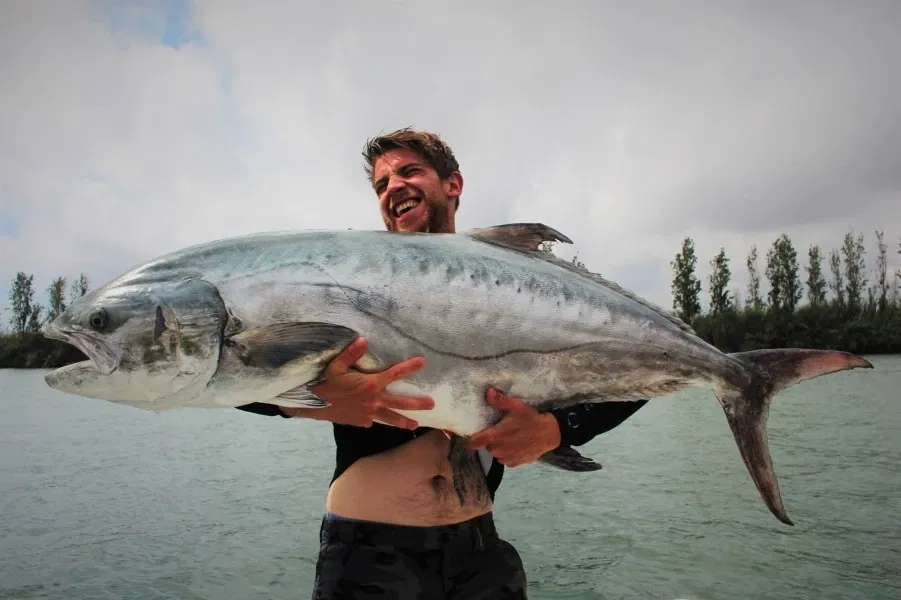
Wellcraft 232 Fisherman EBRO DELTA
L'Ampolla, Ebro Delta

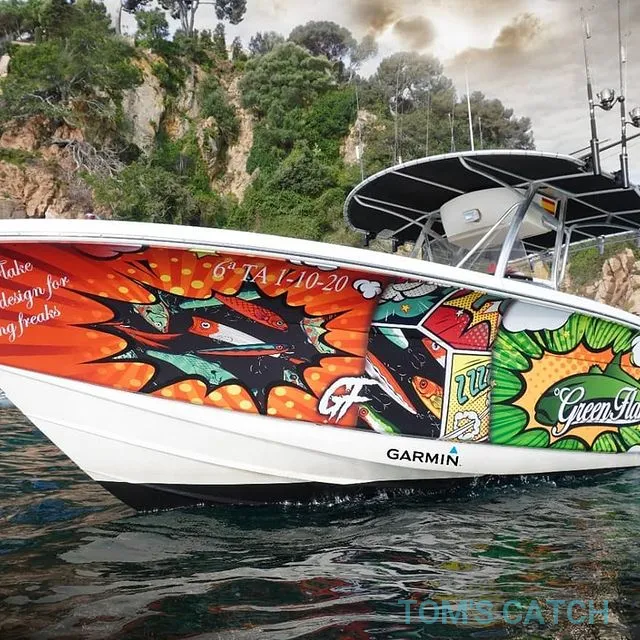
Scout 260/262 Sportfish EBRO DELTA
L'Ampolla, Ebro Delta
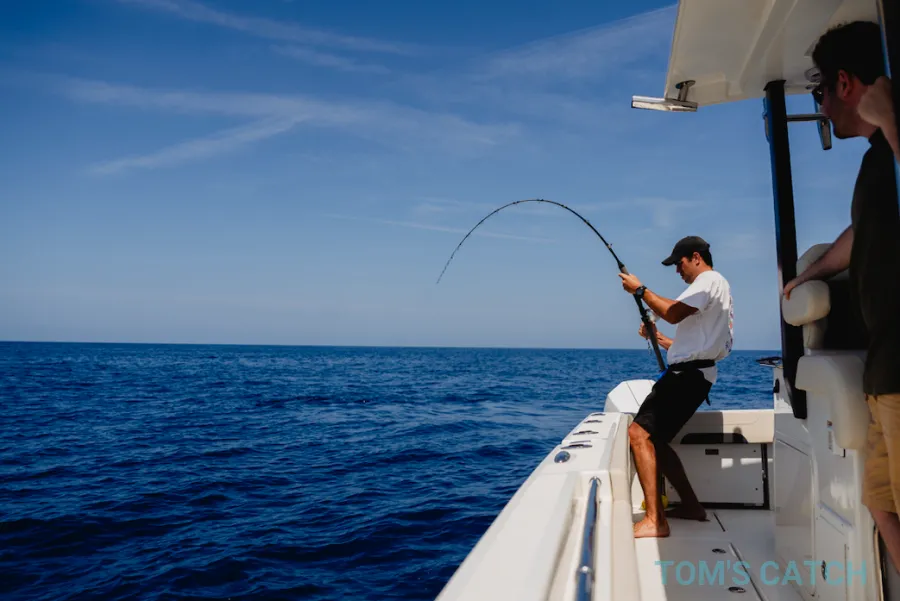

Discover the best Sport Fishing trips in Delta del Ebro, selected by their high user ratings. Ideal boats for amateurs and experts, guaranteeing unforgettable adventures in rich waters.
Find the most competitive prices for excursions in Delta Del Ebro. Discover affordable options for unforgettable Experiences. Our selection of Fishing Boats stands out for its competitive prices, guaranteeing an adventure that fits your budget.
Discover exciting deep sea fishing charters in the Ebro Delta. Dive in waters up to 300 meters deep. The best season for deep sea fishing is from March to November. Booking your adventure from 95€!
Thanks to the mixture of the cold waters of the Ebro River with the warm waters of the Mediterranean Sea, Fishing in the Ebro Delta is special, highly rich in plankton thanks to the river current that reaches the mouth of the sea.
This plankton feeds the schools of bait fish, such as sardines, anchovies and mackerel, being the perfect food for large predators such as leerfish, bluefish, tuna or sea bass.
In this unique place, Fishing in the Ebro Delta is all year round as during the colder winter months when the sea is more choppy due to storms and sea fishing is less fruitful, the Ebro River offers the perfect alternative as it is sheltered and the waters are calmer.
Fishing in the Ebro Delta is ideal for relaxing and contemplating the simple, clean beauty of the area, which invites you to enjoy the moment.
It is no wonder that Fishing in Delta del Ebro is considered one of the best fishing spots on the Catalan Coast, not to mention the Spanish Mediterranean.
Bluefin tuna: It is the most sought after species in Fishing in Delta del Ebro. In fact, it is one of the biggest fish swimming in these coasts. They can grow up to 3.7 meters long and weigh more than 600 kg. The bluefin tuna is a very strong fish and known among Anglers for its never-ending fight. When the bluefin tuna bites, it dives deep into the sea, emptying the reel during its run.
When the tuna hunts on the surface, it can be caught by spinning by casting large lures to the
lures at the tuna's molas. When you are close enough to the tuna, you can cast poppers, stick baits
poppers, stick baits or vinyls to catch it. This Fishing is very action-packed and is very
Anglers have to be very fast and on high alert, watching the tuna live as it swims by.
alert, watching live as the tuna comes out of the depths attacking the lure.
lure.
Fishing can also be done by trolling with the Boat in motion and going at a speed of 7-10 knots.
speed of 7-10 knots, dragging lures behind the Boat in the hope that they will be seen by the tuna.
be seen by the tuna.
The best technique for catching the big tuna is by baitcasting: you fish with the Boat
drifting and throwing sardine or mackerel into the water to attract the tuna. With the
The Sardine and Mackerel trail attracts the tuna and within this trail the hooks are presented with bait with the rods that are available, usually between 2 and 3 rods, being a more blind fishing.
Although it is present throughout the year, the best time for Fishing in the Ebro Delta for Bluefin Tuna in the waters of the Ebro Delta are the months from April to September.
Bluefish: It is one of the most beautiful species for fishing in Ebro Delta. The bluefish is an aggressive fish that is often found in schools of baitfish. Trolling is the most used technique for fishing for bluefish, using artificial lures and mostly natural bait such as spect or needle. Other Anglers prefer to spin fish with the boat, looking for shallow areas where this species is known to be present. Lures such as poppers and stick baits are used to provoke a bite from these predators. Very often there are one or more bluefish chasing the lure, so you have to cast the lure several times to provoke the attack of one of them. This technique is also very colorful and exciting because during the fight the bluefish can make several jumps during the fight.
This species is present throughout the year, but fishing in the Ebro Delta for bluefish is most active between April and October. The bluefish is usually found close to the coast, in shallow waters, between 7 and 15 meters.
Palometon: High on the wish list of sport Anglers, fans of Fishing in the Ebro Delta, is the Palometon; brave fighter that can reach up to 30kg in weight. When active, it can be fished spinning on the surface. Walleyes, poppers and other surface lures are the best weapon in this case. Larger specimens however prefer natural bait. Trolling with spinner, spinner or mullet you can catch leerfish in 4m - 15m of water.
From the beginning of June the first Palometon start to show up for fishing in the Ebro Delta. Until the end of October you can still fish for this type of fish. this fish likes to move around coastal areas between 7 and 30 meters.
Sea bass: : In winter, Fishing in Delta del Ebro for Sea Bass is all day long with vinyls in the river. Once fished, it is recommended to release the sea bass at this time of the year as most of them are females that are about to spawn. In summer the bass are also active, but rather early in the day and at dusk. Perhaps more bass are caught in numbers, but they are smaller specimens.
In theory the good time for fishing in the Ebro Delta for the big sea bass is from the end of November until February, although you can also fish all year round.
Catfish: : Being a freshwater fish, it is obvious that fishing in Ebro Delta for this species is rather upstream. This predator goes well on live bait and also on pellets (a bait made of compressed fishmeal). They are usually caught mainly at dusk and at night, which is when it "goes hunting".
Fishing can be done from the shore or from the boat. The rigging is deposited at strategically chosen points. The easiest is to present a rig on the bottom of the river where a sinker holds the bass line with its bait in place. Sometimes, when fishing in the Ebro Delta with live bait, you also fish with a fixed buoy. The rig with the live bait is attached to the buoy. In case of a bite, this attachment breaks and the fight with the fish can begin.
This predator can be caught all year round, although it is most active in waters above 12°C, i.e. from April to November.
Spring: There is more and more fishing activity in the Ebro Delta during this time of the year as temperatures begin to rise, warming the waters of the sea and increasing the flow of the Ebro River due to the thawing of the Pyrenees. At this time of the year a higher concentration of plankton is generated in the area, feeding the small species of fish that are the perfect food for large predators.
In Spring the Fishing in the Ebro Delta starts to get livelier with the capture of freshwater species as well as saltwater species. From April, May onwards you can start trolling and jigging for Bluefin Tuna and Atlantic Bream.
It is also a good time for fishing with spinners or needles to catch leerfish or bluefish in 7m - 15m depth.
Summer: It is the best time of the year for Fishing in the Ebro Delta. In July, August and September the seagulls cover the sky and the waters are busy with activity. Fishing continues in both salt and fresh waters.
It is a good time to fish for Bluefin Tuna in the high seas. Closer to the coast you can troll the bottom with natural bait (Squid, Mackerel or Horse Mackerel) to catch Barracuda, Bluefish, Denton or Palometon.
During the summer months tuna catches of up to 400kg are frequent when trolling. Spinning also offers unforgettable fishing days in the Ebro Delta.
Autumn: Fishing in the Ebro Delta at this time is excellent for inshore trolling with small lures and sinkers to catch bonito, mackerel, frigate mackerel, dorado and dolphinfish; usually in waters of 40 and 50 meters deep.
It is also a good time for fishing with spinnerbaits to catch leerfish or bluefish in depths ranging from 7 to 15 meters.
Winter: At this time of the year marine fishing is calmer although bottom and deep sea fishing in the Ebro Delta can be very productive if the weather conditions allow it. The most important species at this time of the year are: Big sea bream, Forkbeard, Sea bream, Conger eel, Cherna, Grouper.
In winter it is better to concentrate our efforts in the Ebro river because even if temperatures drop and there are storms, the waters of the river are always sheltered and calm.
In addition, winter is excellent for Pike Perch fishing, especially from January to March. These months the river waters are clearer. Fishing for Pike Perch you can also catch Catfish and/or Black Bass.
December and January are also very good months for Bass fishing in the Ebro River. During this time of the year, it is recommended to fish and release because very often the females are caught, which at this time of the year are full of eggs.
Fishing in the Ebro Delta and its geographical area, crossed by the course of the Ebro River as it passes through Catalonia, is unique. The entrance of the river, at the confluence with Faió until its mouth is rich in flora and fauna. Fishing in the Ebro Delta and its region straddles the Baix Ebre and Montsià.
In the Delta, the coastline is formed by two different marine environments: on the one hand, the Mediterranean Sea projects into an open sea, and on the other hand, two sandy peninsulas close the sea, forming two bays, El Fangar and Els Alfacs. The coastal waters, exposed to a great renewal, are rich in nutrients, generating a high concentration of plankton that forms the basis of the marine food chain, formed by a great variety of fish. In the interior of the bays the waters are calmer and more stagnant. The depth varies from 1 to 8 m and the bottom is covered with extensive meadows of seaweed. These favorable fishing conditions in the Ebro Delta are exploited both by the seabirds that find their food there and by man, who, in addition to exploiting the resources directly, installs platforms for marine crops, mainly mussels. When the sediments transported by the river come into contact with the sea, they lose strength and the sea waves are responsible for depositing and distributing them along the coast, forming the beach.
Fishing in the Ebro Delta we find extensive sandy beaches, where the most extensive dune landscape in Catalonia and of international recognition has originated, being a unique feature of the natural park of the Ebro Delta thanks to its exceptional state of conservation.
The beaches and dunes are home to large concentrations of terns, gulls and waders, which use these spaces to make their nests and to feed both inside the sea and in the area where the waves break.
METEOROLOGY
Fishing in the Ebro Delta and its climate is pleasant all year round, which is why there is such an abundant variety of marine species in the area. The climate is Mediterranean, so temperatures are moderate (they do not usually rise above 30ºC in summer and rarely drop below 8ºC in winter).
In this territory it is very common to find quite intense and persistent wind. The Mistral, coming from the northwest and sometimes from the north, blows from the Mediterranean coasts towards the sea, being a cold, dry wind with low humidity. In this area we can also find Levante winds, coming from the east, the latter being more humid, bringing rain to the area.
For Fishing you need a fishing license that can be obtained on the website of the Generalitat de Catalunya:
>> Obtain Recreational Surface Fishing License.
Remember that Fishing charters usually already have a collective fishing license so you don't need to buy one if you are going to charter a Boat.
| Average capacity: 5 people |
| Popular fishing techniques: Jigging, Bottom fishing, Tuna Fishing |
| Average price: 159.67774508153 per day |
| Low season price:: US$651 per day |
| High season price: US$1511 per day |
| Includes: Fishing equipment, Fishing License, Bait & lures |
Receive exclusive offers, inspiring stories, and updates on fishing regulations.
Subscribe and receive tips and news for your next fishing trip.
“Crecí un 20% mis reservas con Tom’s Catch”
Oscar Santos,
Captain from Luna in Puerto Banús, Marbella (Spain).
Oscar Santos,
Captain from Luna in Puerto Banús, Marbella (Spain).


