Pollock vs Cod: Which is Better?
Updated: July 2026 · Reviewed by the Tom’s Catch angling team
Two white fish, same family, sold side by side at every fish counter and fried in every chip shop from Boston to Barcelona. So when it comes to pollock vs cod, is one actually better than the other—or are you paying extra for a name?
The short answer: cod is milder, sweeter and flakier, and it costs more. Pollock has a firmer bite and a slightly stronger, brinier taste, it’s cheaper, and—if you care about the ocean you fish—Alaska pollock is one of the most sustainable stocks on the planet, while a lot of Atlantic cod is not. Neither is “wrong.” The right pick just depends on your plate, your budget and your conscience. Here’s everything you need to know before you choose.
Pollock vs Cod at a Glance
| Pollock | Cod | |
|---|---|---|
| Family | Cod family (Gadidae) | Cod family (Gadidae) |
| Look | Silvery-green body, small or missing chin barbel, projecting lower jaw, curved lateral line | Brown/speckled body, prominent chin barbel, projecting upper jaw, pale straight-ish lateral line |
| Typical size | Up to ~1 m; usually 1–3 lb (0.5–1.5 kg) | Up to ~1.8 m; often 5–12 kg, can top 100 kg |
| Taste | Slightly stronger, brinier, more savory | Mild, clean, subtly sweet |
| Texture | Firm but more delicate flakes | Firm, large, meaty flakes |
| Protein (per 100 g) | ~23 g | ~19–23 g |
| Price | Cheaper (budget-friendly) | Higher (premium) |
| Sustainability | Alaska pollock: MSC-certified, very well managed | Mixed—many Atlantic stocks overfished; look for MSC / Pacific & Alaska cod |
How to tell Pollock vs Cod Apart?
Both fish belong to the same family, live near the ocean bottom and feed on crustaceans and small fish, and both are caught commercially right across the North Atlantic—from North America over to Spain. Side by side, though, they’re easy to separate once you know where to look:
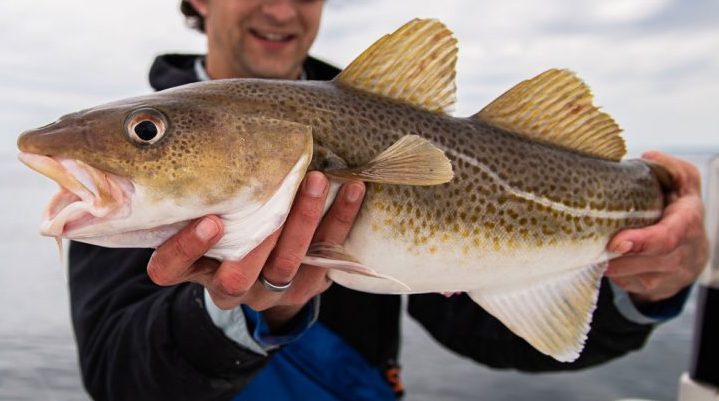
- Body colour. Pollock have a silvery, greenish body. Cod have a browner, speckled body with a pale lateral line running along the side.
- The chin barbel. This is the giveaway. Cod have a prominent whisker-like barbel under the chin (they use it to find food on the seabed). Pollock have only a small barbel—or none at all on bigger fish.
- The jaw. Cod’s upper jaw sticks out past the lower. On pollock it’s the opposite—the lower jaw juts forward.
- The lateral line. Cod’s runs fairly straight and pale; pollock’s has a more curved, “crooked” line.
Both share the classic cod-family build: three dorsal fins and two anal fins. Size is the other big tell. Pollock typically reach about a metre and 1–3 pounds on the line, while cod run much larger—commonly 5–12 kg, and the giants have exceeded 100 kg. So a big fish is far more likely to be a cod. Prefer cod’s milder cousin comparison? See our cod vs haddock guide.
One quick note on names: “Alaska pollock” (Gadus chalcogrammus) is the fish behind most fish sticks and imitation crab, while “Atlantic pollock” or pollack (Pollachius virens, also called saithe or coley) is the darker-fleshed European cousin. When people say “pollock” at the counter, they almost always mean Alaska pollock.
What Do Pollock and Cod Taste Like?
This is where most people actually decide. Cod has a mild, clean, almost sweet flavour—so neutral it’s sometimes called the “chicken of the sea”—and it cooks into big, meaty flakes that hold together on the plate. It’s the classic, forgiving white fish.

Pollock leans a touch stronger. It tastes a little more of the sea—brinier and more savoury—and while it’s still firm, its flakes are finer and more delicate. Neither is “fishy” in a bad way. If you want the mildest, flakiest bite, cod wins. If you don’t mind (or you like) a bit more character for less money, pollock more than holds its own—which is exactly why so many chip shops and fish-stick brands use it.
Pollock vs Cod: Nutrition
Nutritionally these two are near-twins: both are lean, high-protein, low-fat white fish that are low in mercury. The differences are small.
- Protein & calories. Both deliver roughly 19–23 g of protein per 100 g for around 80–110 kcal—an excellent lean-protein ratio either way.
- Minerals. Pollock tends to edge ahead on minerals like phosphorus, magnesium, selenium and potassium.
- Iodine & cholesterol. Cod is a strong iodine source (good for thyroid health) and tends to be a little lower in cholesterol and sodium.
Bottom line: unless you’re targeting a specific nutrient, you’re not making a “healthier” choice by paying more for cod. Both are smart picks.
Which Is Cheaper, Pollock or Cod?
Pollock. In most places it costs noticeably less than cod, and that’s the whole reason it exists on so many menus. Pollock rose to fame as the cheaper, versatile stand-in for cod—especially as cod prices climbed and overfishing worries pushed buyers to look for alternatives. If you’re feeding a family or cooking in volume, pollock stretches further. If you want the “premium” white fish for a special dinner, cod is the splurge.
Which Is More Sustainable?
If sustainability matters to you, this is the section that should tip the scales—and it’s the one the old version of this guide never covered.
Alaska pollock is a sustainability standout. It’s one of the largest fisheries on Earth, has been MSC-certified since 2005, ranks among the highest-scoring fisheries in the MSC programme, and is remarkably clean—incidental catch of other species runs under 1%. NOAA lists the main Alaska pollock stocks as not overfished. Buy pollock with a clear conscience.
Cod is more complicated. Many Atlantic cod stocks have been hammered: ICES has reported that only a small fraction of North Atlantic cod stocks sit at biologically sustainable levels, North Sea cod lost its MSC certificate in 2019, and the Gulf of Maine and Georges Bank stocks are classed as overfished and under rebuilding plans. The good news is that Pacific cod and Alaska-caught cod are far better managed and carry MSC certification. So the move is simple: check the label, look for the MSC blue tick, and favour Pacific/Alaska cod over unspecified Atlantic cod.
Popular in many Cuisines
Beyond taste and price, choosing between them often just comes down to availability. Pollock has long served as a cheaper, versatile alternative to cod, and it’s the fish quietly behind a huge amount of what you already eat—fish sticks, breaded fillets and imitation crab (surimi). Cod remains the star of the classic fish and chips, salt cod dishes and countless European recipes. Both take on flavour beautifully, which is why they show up in kitchens all over the world.
Cod and Pollock Recipes
Because their flavour is mild and their flesh flakes cleanly, both fish are wonderfully easy to cook—and largely interchangeable in recipes. A few ideas to get you started:

- Curried cod or pollock with chickpeas
- A hearty fish and chorizo stew
- Coconut fish curry
- Baked fillets with olives and pancetta
- Basque-style Bacalao (salt cod)
Tip: in almost any battered, breaded or stewed recipe you can swap one for the other. Cod holds its shape a touch better for grilling and big flakes; pollock is the budget hero for fried and breaded dishes.
So, Which Is Better—Pollock or Cod?
Here’s the honest verdict. Choose cod if you want the mildest, sweetest, flakiest white fish and you don’t mind paying more—just look for MSC-certified Pacific or Alaska cod. Choose pollock if you want a firmer, brinier bite, a lower price, and a fishery you can feel genuinely good about. For most everyday meals—fish and chips, tacos, curries, sheet-pan dinners—pollock quietly delivers cod’s experience for less. There’s no bad choice here; there’s only the right choice for your plate.
Catch Your Own Cod or Pollock
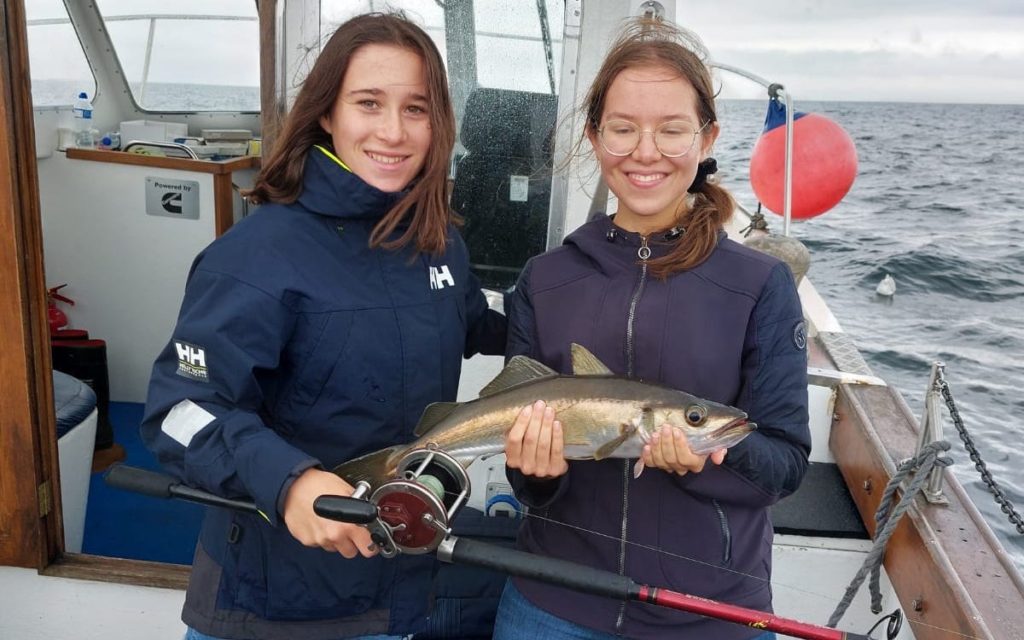
Reading about them is one thing—feeling one thump your line at first light is another. Cod and pollock are two of the most rewarding species to target on a sea-fishing trip across the North Atlantic, from Ireland and Norway to the coasts of Spain, and a local skipper will put you right on the marks where they’re biting. Whether it’s your first time on the water or you’re chasing a personal-best cod, browse and book a sea & bottom fishing charter on Tom’s Catch, check what’s biting in your destination, and go land your own. Tight lines.

Pollock vs Cod FAQ
Is pollock healthier than cod?
They’re nutritionally very close. Both are lean, high-protein, low-fat and low in mercury. Pollock edges ahead on some minerals; cod offers more iodine and slightly less cholesterol. Neither is meaningfully “healthier” for most people.
Does pollock taste like cod?
Very similar, but not identical. Cod is milder, sweeter and flakier; pollock is a little stronger and brinier with a firmer, finer flake. In battered or breaded dishes most people struggle to tell them apart.
Is pollock or cod cheaper?
Pollock is cheaper in most markets, which is why it’s the go-to for fish sticks, breaded fillets and many chip shops. Cod is the pricier, premium option.
Which is more sustainable, pollock or cod?
Alaska pollock is one of the world’s most sustainable, MSC-certified fisheries. Cod is mixed—many Atlantic stocks are overfished, so look for MSC-certified Pacific or Alaska cod.
Can I use pollock instead of cod in recipes?
Yes. They’re largely interchangeable. Cod holds together a touch better for grilling; pollock is ideal for frying and breading and costs less.